How to Estimate Commercial Construction Projects: Step-by-Step Guide


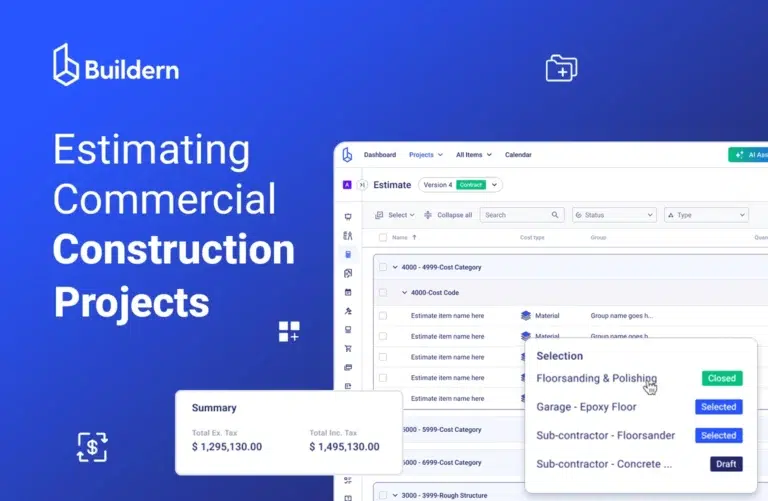
Estimating commercial construction projects is a different discipline from residential estimating. The scale is larger, the risk exposure is higher, and the financial consequences of small mistakes are magnified.
I have seen projects where a single missed scope item erased the entire margin. Meanwhile, a disciplined estimate usually creates clarity that carries through the entire build.
Yet, just like during any other construction project, every schedule decision, procurement strategy, and subcontractor contract eventually ties back to the original commercial estimate. When it is inaccurate or incomplete, the project team spends the rest of the job trying to recover.
So, my goal today is not theory. I’ll help you develop a structured workflow that used to help my fellow estimators produce reliable numbers, reduce uncertainty, and create estimates that actually hold up once construction begins.
Table of Contents
- How Commercial Construction Estimating Is Different
- Step 1: Review the Bid Package and Project Scope
- Step 2: Conduct a Site Visit
- Step 3: Build the Work Breakdown Structure
- Step 4: Perform Quantity Takeoffs
- Step 5: Estimate Material Costs
- Step 6: Calculate Labor Costs
- Step 7: Include Equipment and Subcontractor Costs
- Step 8: Account for Indirect Costs and Overhead
- Step 9: Add Contingency and Risk Allowances
- Step 10: Final Review and Bid Preparation
- How Technology Is Changing Commercial Estimating
- Common Estimating Mistakes to Avoid

How Commercial Construction Estimating Is Different
Estimating for larger commercial jobs carries different pressures than smaller residential jobs.
Commercial project management typically involves:
- More trades and subcontractors
- Larger procurement packages
- More permits, compliance requirements, and safety regulations
- Higher coordination complexity
- Larger financial exposure if something is missed
Because of this complexity, commercial estimates must be far more structured. The estimate must account for labor, materials, equipment, subcontractor scopes, overhead, and construction contingency while reflecting the actual site conditions and the project’s technical requirements.
Another factor is cost volatility. Material prices, labor availability, and regulatory requirements can all shift during the life of a commercial project. A strong estimate anticipates these pressures and includes realistic buffers for risk.
The Goal
When done properly, estimating serves three purposes:
- Determining whether a project is financially viable
- Creating a competitive and defensible bid
- Providing the cost baseline used to manage the project during construction
So, how do you actually estimate commercial projects?
Step 1: Review the Bid Package and Project Scope
Every estimate starts with understanding the scope. This sounds obvious, but it is where many errors begin.
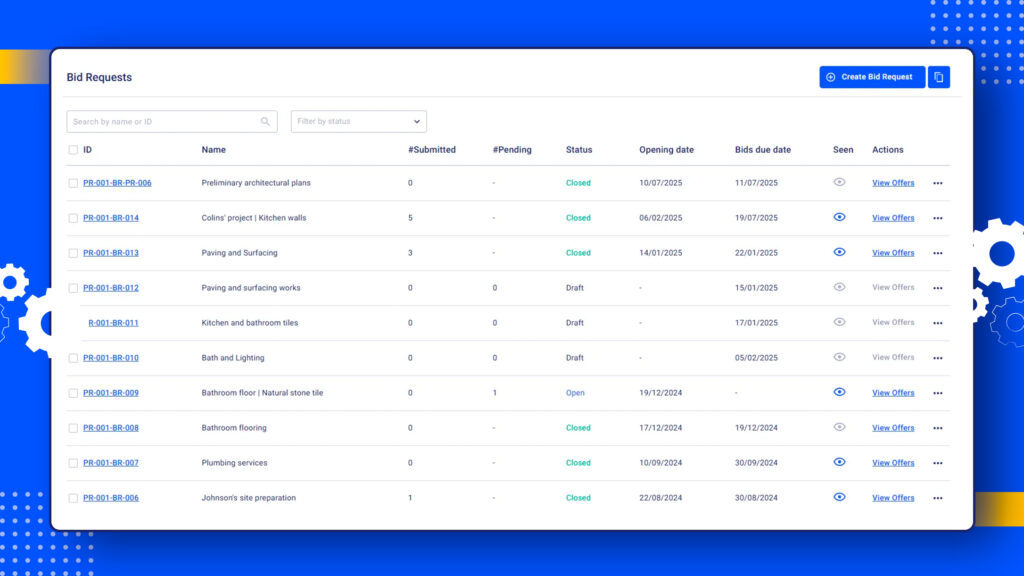
The estimator must review all bid documents carefully. This includes:
- Drawings and specifications
- Owner requirements
- General conditions
- Contract terms
- Engineering reports
- Site documentation
This review defines what is included and excluded from the estimate. Missing details at this stage often lead to scope gaps later.
Tip 💡For example, the documents might specify that an existing wall must be removed but fail to clarify the wall type or structural conditions. These details affect labor hours, demolition methods, and disposal costs.
A strong estimator develops a Basis of Estimate document at this stage, recording aspects like assumptions, exclusions, scope, and potential risk areas.
Step 2: Conduct a Site Visit
A site visit is critical for commercial estimating. Drawings rarely reveal the full reality of the site. While during the visit, the estimator evaluates:
- Site accessibility
- Soil conditions and grading challenges
- Existing structures or utilities
- Environmental constraints
- Local regulations and permitting requirements
These factors influence excavation costs, equipment needs, logistics planning, and schedule duration. Site conditions can significantly alter project costs, which is why relying only on drawings can lead to inaccurate estimates.
Step 3: Build the Work Breakdown Structure
Once the scope is understood, the estimator organizes the project into a Work Breakdown Structure (WBS). It divides the project into manageable components, such as:
- Site work
- Concrete and foundations
- Structural steel
- Building envelope
- Mechanical systems
- Electrical systems
- Interior finishes
Each component can then be estimated independently before combining into the full project estimate.
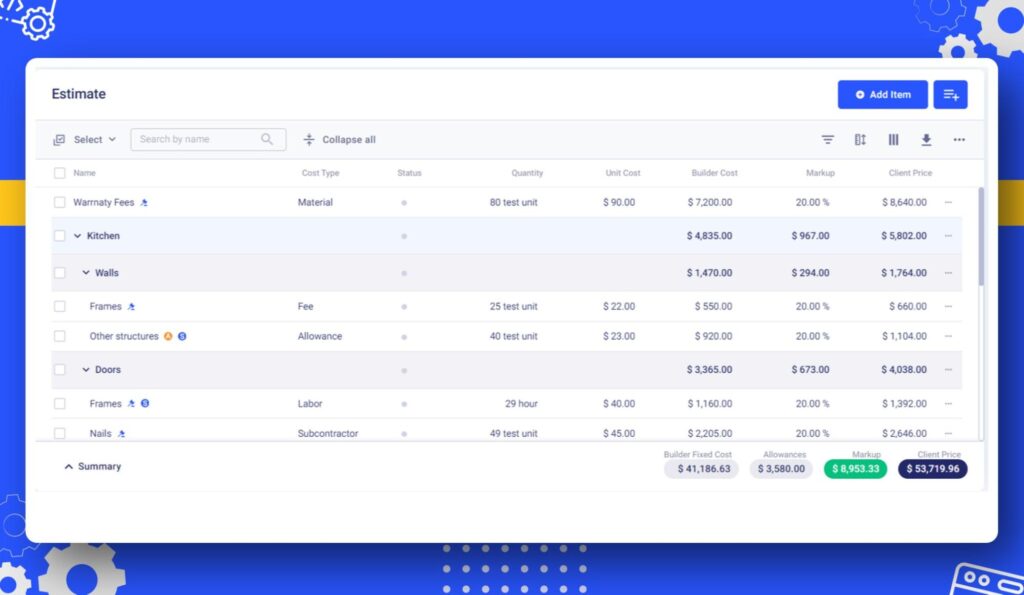
Many commercial estimators align this structure with CSI MasterFormat divisions, which standardize cost tracking across construction projects.
The benefit of a structured breakdown is clarity. Every scope item must live somewhere in the estimate, which reduces the chance of missing costs.
Step 4: Perform Quantity Takeoffs
During takeoff, the estimator measures every physical component of the project. This includes but isn’t limited to components like concrete volumes, wall areas, roofing square footage, electrical fixture counts, etc.
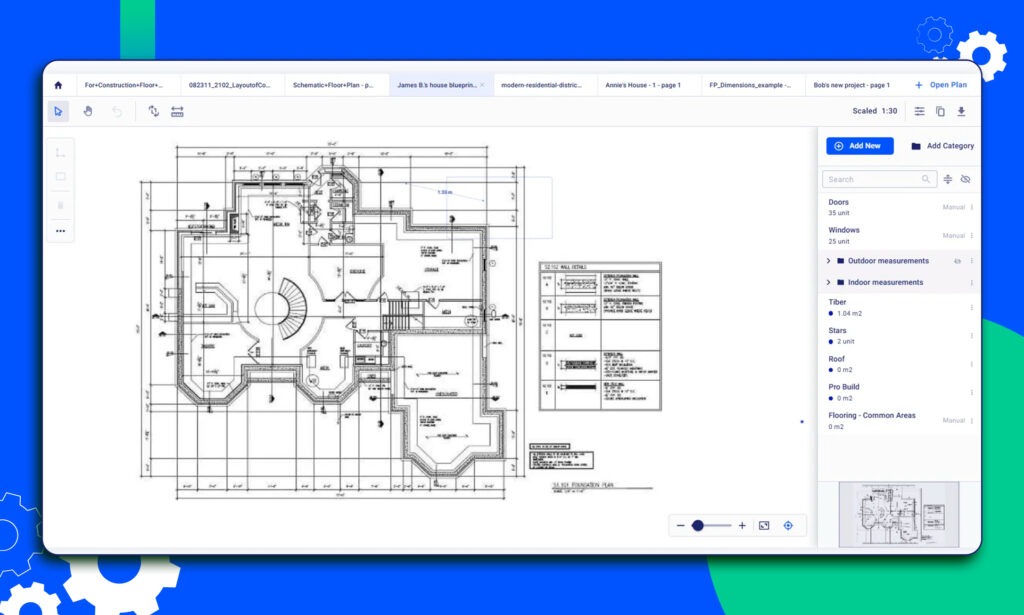
The goal is to calculate exactly how much material is required to complete the project. These quantities form the basis for material costs, labor hours, and equipment requirements.
Accuracy here is essential. If quantities are wrong, every downstream cost calculation becomes wrong as well. Therefore, I strongly recommend using digital takeoff tools to improve speed and accuracy.
Step 5: Estimate Material Costs
After calculating quantities, the next step is pricing materials.
Material prices must reflect:
- Current supplier costs
- Market volatility
- Transportation expenses
- Storage and handling requirements
Commercial construction projects often rely on supplier quotes for major materials such as steel, concrete, and specialized systems.
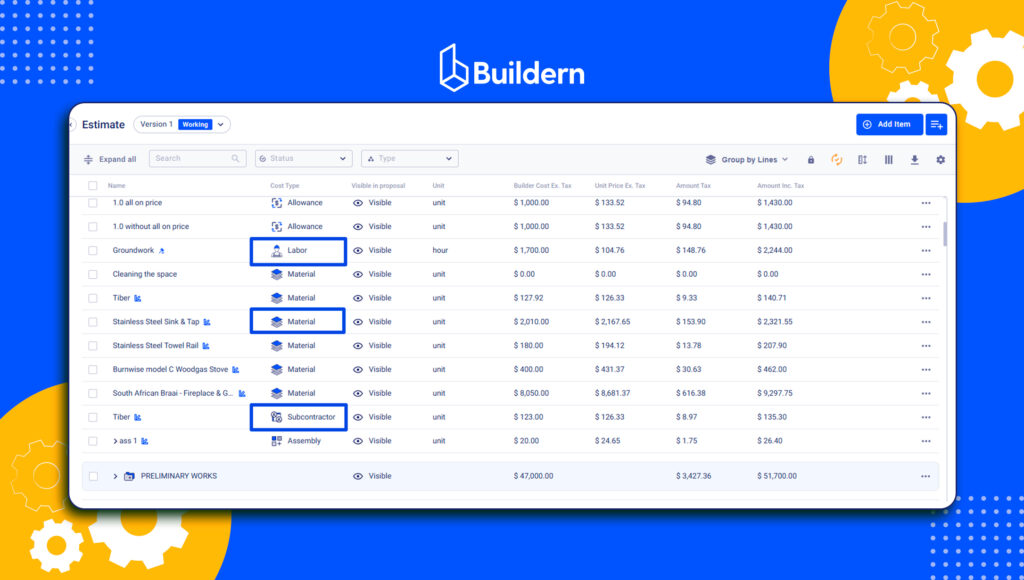
While material prices can fluctuate significantly due to supply chain conditions and demand cycles, monitoring market trends helps estimators adjust costs accordingly. Large commercial projects may also require procurement strategies that lock in prices early to protect against future increases.
Step 6: Calculate Labor Costs
Labor is often the largest portion of a commercial construction estimate.
Labor productivity varies by trade, project complexity, and site conditions. It involves calculating assets like productivity rates, hourly wage, overtime potential, etc. Experienced estimators rely on historical data from similar projects to estimate labor hours more accurately.
For example, installing electrical systems in a hospital is far more complex than installing the same systems in a warehouse.
Productivity assumptions must reflect that complexity.
Step 7: Include Equipment and Subcontractor Costs
In commercial projects, a large portion of the budget depends on engaging subcontractors and using specialized equipment. Equipment costs cover items such as cranes, excavators, concrete pumps, and temporary power systems. Subcontractor costs cover areas like electrical, plumbing, and HVAC.
It’s important to account not only for the rates themselves but also for logistics of deliveries, rental durations, maintenance, risk of delays, and the need to coordinate among different project participants. Effective planning of these costs helps to more accurately forecast the cost of sales and set realistic budgets during the planning and execution phases.
Step 8: Account for Indirect Costs and Overhead
Direct construction costs are only part of the estimate.
Commercial projects also include indirect costs such as project management staff, insurance and bonding, permits, inspections, and so on.
These costs support the project but do not correspond directly to specific construction activities.
Failing to account for these costs can dramatically reduce profitability.
Step 9: Add Contingency and Risk Allowances
Even the most detailed estimate cannot predict every variable.
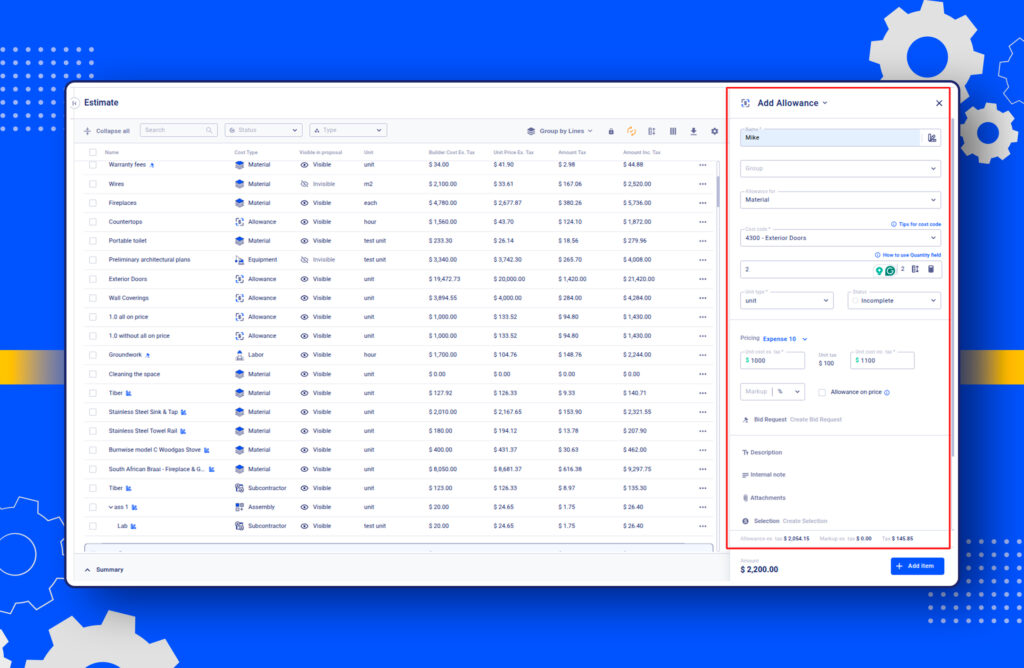
Commercial construction projects face uncertainties such as:
- Weather delays
- Design revisions
- Material shortages
- Unforeseen site conditions
For this reason, most estimates include contingency allowances. Typical contingency ranges from five to fifteen percent, depending on project complexity and risk level.
The goal is not to inflate the estimate but to protect the project from unpredictable events.
Step 10: Final Review and Bid Preparation
Before submitting a bid, the estimate must undergo a thorough review. As a general contractor, you may also choose to conduct internal estimate reviews with project managers or senior estimators to identify potential gaps.
Reviewers check completeness, scope alignment, unit rates, contingency reserves, and compliance with client requirements. Additional analyses may include value engineering opportunities, markup adjustments, and cross-checks against historical data.
The final documentation is approved and signatures collected before the bid requests are submitted.
How Technology Is Changing Commercial Estimating
Commercial estimating is increasingly supported by digital tools.
Modern estimating platforms help teams:
- Automate quantity takeoffs
- Connect estimates to project budgets
- Analyze historical cost data
- Track scope changes
Advanced systems can also integrate estimating with scheduling and project management workflows. Such a connection allows cost assumptions from the estimate to flow directly into execution planning.
Technology does not replace experienced estimators, yet it improves consistency, speed, and accuracy.
Common Estimating Mistakes to Avoid
In my experience, even the most seasoned professionals can fall into traps that compromise the accuracy of a bid.
I’ve talked with fellow contractors to identify the most common and annoying estimating mistakes along with the professional solutions they use to mitigate them.
Underestimating Indirect Costs
“Early in my career, I focused too heavily on direct labor and materials, often overlooking the “hidden” costs of running a project. I failed to account properly for mobilization, temporary site utilities, and administrative overhead.” – Matthew M., General Contractor
My Pro Solution: I now utilize a standardized general conditions checklist for every project. I treat site management, trailers, and safety equipment as line items that are just as critical as the concrete or steel, ensuring my margins aren’t eroded by overlooked operational expenses.
Ignoring Site-Specific Conditions
“I’ve seen many estimators fall into the trap of using a “standard” unit price without visiting the site. Soil conditions, restricted access for equipment, or limited staging areas can drastically increase labor hours and logistics costs.” – John W., General PM
My Pro Solution: I make site visits mandatory before finalizing any significant bid. If I cannot physically be there, I request a detailed site survey or video walkthrough. I then adjust my labor productivity factors based on the specific constraints of the location, such as high-rise stair-carry requirements or urban traffic restrictions.
Relying on Outdated Material Pricing
“In a volatile market, using pricing from a project completed six months ago is a recipe for disaster. I once lost a significant amount of profit because I didn’t account for a sudden spike in lumber costs between the estimate and the procurement phase.” Anna S., General Contractor
My Pro Solution: I maintain close relationships with my primary suppliers and request “lock-in” quotes or price-validity windows. For long-term projects with high commodity risk, I include escalation clauses in my proposals or build a specific price-contingency fund based on current market trends.
Inaccurate Labor Productivity Assumptions
“One of the hardest lessons I learned was that “book rates” for labor rarely match reality. Overlooking technical complexity or the learning curve for a new crew can lead to massive man-hour overruns.” – Conrad B., Chief Estimator
My Pro Solution: I constantly track actual labor performance against my estimates using historical data from our project management software. Instead of relying on generic averages, I consult with my field superintendents during the bidding phase to get a realistic estimate of how many hours a specific task will actually take under the current field conditions.
Failure to Review Subcontractor Scopes
“I have occasionally been burned by “low-ball” subcontractor quotes that actually had massive exclusions. If the subcontractor missed the low-voltage wiring in an electrical bid, that cost eventually lands back on me as the general contractor.” – Dan B., Construction PM
My Pro Solution: I perform a rigorous “scope leveling” process. I create a comparison matrix for every trade, ensuring that all bidders are quoting the exact same scope of work. If a quote looks suspiciously low, I call the subcontractor to verify that they haven’t excluded any critical requirements from the drawings.
Conclusion
Commercial construction estimating is less about producing a number and more about building a reliable financial framework for the project. When the scope is carefully reviewed, quantities are measured accurately, and labor, materials, and subcontractor costs are documented in a structured way, the estimate becomes a dependable reference point for the entire build.
In practice, strong estimates connect directly to execution. Procurement planning, subcontractor agreements, schedule coordination, and budget tracking all originate from the assumptions made during estimating.
Builders who treat estimating as a disciplined workflow rather than a quick pricing exercise create bids that not only win projects but also hold up once construction begins.